
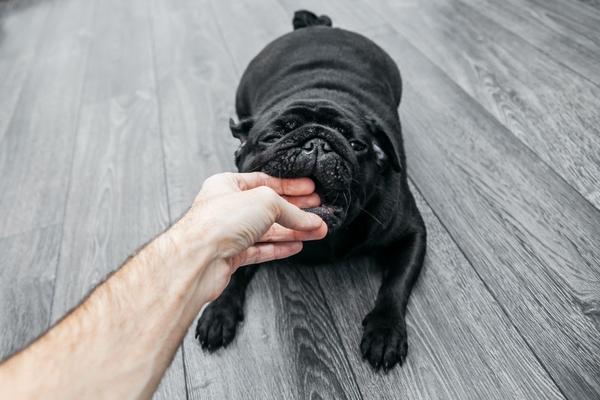
Puppy teeth may be tiny, but they can make playtime surprisingly painful. The good news is that puppy nipping is usually normal rather than a sign of aggression. Young puppies explore with their mouths, practise social skills through play, and chew more when their gums are sore. Your goal is not to punish this natural behaviour, but to teach your puppy where those teeth may go, how gently to use their mouth, and how to settle when excitement rises.
Progress rarely happens overnight. A teething puppy may improve for several days and then become mouthy again during an energetic evening. Consistency matters more than perfection: everyone in the home should respond in the same calm, predictable way.
Why Puppies Bite and Nip
Puppies mouth people because of play, curiosity, teething discomfort, tiredness, hunger, frustration, or overexcitement. Watch what happens immediately before the biting. A puppy who grabs sleeves during a lively game needs a different response from one who becomes frantic after being awake too long.
Bite inhibition training is also important. Puppies must learn to control jaw pressure, not simply avoid using their mouths. That lesson matters because any dog may mouth a person when frightened, startled, or in pain.
8 Gentle Techniques That Work
1. Redirect Teeth to an Appropriate Toy
Keep a suitable toy within reach during play and in rooms where nipping happens most often. When your puppy aims for hands, trousers, or ankles, become still and calmly place the toy near their mouth. Praise them when they bite it instead. Choose an item long enough to protect your fingers, such as a soft tug toy.
For example, place a toy near the sofa before the evening “puppy witching hour.” If your puppy launches at your sleeves, redirect immediately rather than searching after the behaviour has escalated.
2. Make Biting End the Fun
If teeth touch skin or clothing, pause the interaction. Stop moving, remove attention, and turn away for several seconds. Resume only when your puppy is calmer. If the puppy bites again, repeat the pause or step briefly behind a gate. The message is simple: gentle play continues, but biting makes the game disappear.
A high-pitched yelp works for some puppies but excites others. If biting gets worse after “ouch,” use a quiet withdrawal. Avoid shouting, tapping the nose, holding the muzzle shut, or physical corrections.
3. Reward Calm, Mouth-Free Behaviour
Notice and reward moments when your puppy sits near you, carries a toy, licks rather than bites, or keeps four paws on the floor. Offer a small treat, calm praise, or gentle attention. Reinforcing these choices shows the puppy what to do instead of only what not to do.
You can also ask for a simple “sit” before play. This creates a pause and gives energetic puppies a predictable route to attention.
4. Support Your Teething Puppy
Chewing can relieve sore gums, so provide safe options in different textures. Puppy-safe rubber toys, chilled teething toys, and food-stuffed toys can be useful. Supervise chewing, choose the correct size, and replace anything that is cracking, shedding pieces, or becoming small enough to swallow.
Rotate toys so familiar items regain interest. For more ideas, a guide to puppy-safe chew toys would be a natural internal resource.
5. Prevent Overtired Biting
Many intense biting episodes are signs of exhaustion. Puppies need frequent rest, yet they often keep playing after they can regulate themselves. If nipping becomes faster, harder, and more chaotic, take your puppy for a toilet break and then guide them to a quiet pen, crate, or puppy-proofed area with a safe chew.
This should feel like a calm reset, not punishment. A guide to puppy crate training can help owners create a positive resting space.
6. Manage Clothing and Moving Feet
Fast movement can trigger chasing and grabbing. When your puppy attacks trouser legs or shoelaces, stop walking rather than pulling away. Tugging your leg may turn the moment into a game. Scatter a few pieces of kibble, cue a known behaviour, or redirect to a toy, then move again once the puppy disengages.
During training, avoid clothing with dangling cords and use gates around busy hallways. Good management prevents repeated rehearsal.
7. Use Short Training and Enrichment Sessions
A puppy with appropriate outlets is easier to live with. Use brief reward-based sessions to practise name response, hand targeting, sitting, settling, and releasing objects. Sniffing games, food puzzles, and age-appropriate play can reduce restless mouthing without overexercising a growing dog.
Keep sessions short enough for success. Two focused minutes may be more useful than fifteen frustrating ones. A guide to teaching “leave it” offers a useful next step.
8. Keep the Whole Household Consistent
Mixed messages slow learning. If one person allows hand wrestling while another ends play for tooth contact, the puppy cannot understand the rule. Agree that hands are for calm handling, toys are for biting, and tooth contact always leads to the same brief pause.
Supervise children closely and teach them to stand still rather than squeal, run, or push the puppy away. Adults should step in before play becomes rough. Reward-based puppy classes can also help families improve timing and read body language.
When Puppy Biting Needs Professional Help
Normal play biting is usually loose, bouncy, and linked to excitement. Contact your veterinarian or a qualified reward-based behaviour professional if biting is sudden, unusually intense, associated with guarding, triggered by handling, or accompanied by stiff posture, freezing, repeated growling, or attempts to cause injury. Pain and fear can change behaviour, so a medical check may be appropriate.
Frequently Asked Questions
How long does puppy biting last?
Most puppies become less mouthy as teething ends and training becomes consistent, although the timeline varies. Expect gradual improvement rather than an instant stop.
Should I let my puppy bite my hands gently?
It is clearer to redirect your puppy to toys and reward mouth-free interaction. Teaching bite inhibition matters, but regular hand biting can become a confusing habit.
Why does my puppy bite more at night?
Evening biting often reflects excitement or tiredness. Try an earlier toilet break, a calm chew, reduced stimulation, and a scheduled nap before the usual difficult period.
Is a crate suitable for a biting time-out?
A crate can be a calm resting place, but it should not become a frightening punishment. Guide the puppy in quietly with something safe to chew and keep the break low-key.
Build Better Habits One Interaction at a Time
Learning how to stop puppy biting is mostly about changing the pattern around it. Redirect to toys, end rough play calmly, reward good choices, meet teething and rest needs, and prevent situations your puppy cannot yet handle. With patient repetition, those sharp little teeth become less central to every interaction, while your puppy learns the self-control and communication skills needed for adult life.