
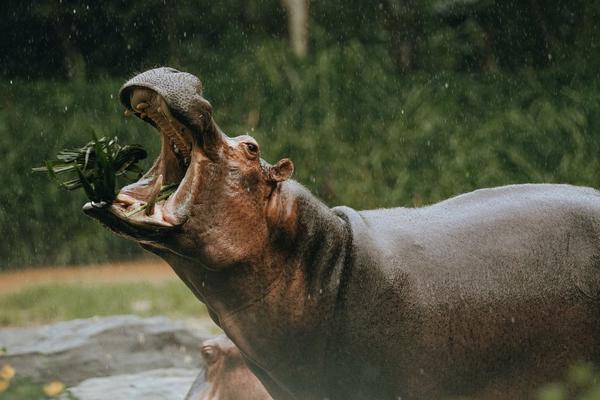
A hippopotamus can look almost motionless in a river, with only its eyes and ears above the surface. After sunset, that same enormous animal may travel across open grassland to eat. This daily movement between water and land explains many of the most surprising hippopotamus facts. Hippos are semi-aquatic mammals, not oversized aquatic grazers, and their lives depend on having both safe water and nearby pasture.
Where Do Hippopotamuses Live?
The common hippopotamus lives in parts of sub-Saharan Africa, particularly where rivers, lakes and wetlands meet open grazing areas. Its range includes areas of eastern and southern Africa, with smaller, more fragmented populations in parts of western and central Africa.
A suitable hippo habitat offers more than a deep pool. Hippos need water they can use during hot daylight hours, dependable access during the dry season and enough grass within travelling distance. Slow-moving rivers and sheltered lake margins are especially useful, although animals also occupy wetlands and muddy wallows.
Why Hippos Spend Their Days in Water
Despite their bulky appearance, hippos are sensitive to heat and dehydration. They usually rest in water or mud during the day, then emerge around dusk to graze. Keeping the body submerged helps protect their relatively hairless skin and reduces exposure to the hottest sun.
What Do Hippos Eat?
The hippo diet consists mainly of grasses eaten on land. Hippos use broad, muscular lips to crop vegetation, often selecting short grasses rather than feeding primarily on water plants. Their enormous canine teeth are more important in displays and fighting than in gathering food.
An adult may spend several hours grazing overnight and travel several kilometres when nearby grass is scarce. Although hippos occasionally consume other material, they are best understood as predominantly herbivorous grazers. They also have complex stomachs for processing fibrous plants, but unlike cattle, they do not chew cud.
This connection between watery shelter and grassland feeding makes hippos different from many other large African savanna mammals. Protecting a river pool alone is not enough if the routes to its surrounding pasture disappear.
Hippo Behavior: Social Groups and Territory
Who Lives Together?
Common hippos often rest in groups containing females, young animals and one or more males. Group size changes with water conditions and local population density. Individuals may appear peaceful while resting side by side, but their relationships are not always gentle.
Why Do Hippos Open Their Mouths So Wide?
A wide-open mouth may serve as a threat display, revealing impressive canine and incisor teeth. Dominant males defend stretches of water against rival males, and confrontations can become violent. Hippos also communicate through grunts, snorts and distinctive wheeze-honks that carry across river systems.
Territorial behavior is strongest around important resting and breeding waters; feeding areas on land are generally less strictly defended. A hippo encountered outside the water should never be assumed harmless merely because it is eating grass.
Hippopotamus Adaptations That Make River Life Possible
Eyes, Ears and Nostrils Above the Waterline
A hippo’s eyes, ears and nostrils sit high on its head. That arrangement allows it to watch, hear and breathe while most of its body remains underwater. Its nostrils close during submersion, and protective membranes help shield its eyes. Adults can stay submerged for roughly five minutes or longer before surfacing for air.
Walking Underwater Rather Than Swimming
One of the strangest hippopotamus facts is that adult hippos do not typically swim like otters or crocodiles. Their dense bodies tend to sink, so they walk or push off the bottom, sometimes moving in bouncing, almost weightless strides. They still need access to the surface because they breathe air, not water.
A Natural Skin Secretion
Hippos produce a reddish, oily skin secretion sometimes misleadingly called blood sweat. It is neither blood nor ordinary sweat. The secretion helps protect their skin from sunlight and has antimicrobial properties, but it does not replace the need to remain moist. Prolonged exposure to dry conditions can damage their skin.
These hippopotamus adaptations explain why the animal is so comfortable in rivers while remaining dependent on land. For readers comparing species, adaptations of aquatic mammals provide an interesting contrast: hippos retain a fully terrestrial feeding routine.
How Big Are Hippos?
Common hippos rank among the largest living land mammals. Adult females often weigh around 1,400 kilograms, while males can be substantially heavier. Their barrel-shaped bodies, short legs and broad heads create a distinctive silhouette, yet they can move surprisingly quickly over short distances on land.
Their formidable tusk-like teeth are modified canines and incisors that continue growing and are used in conflict. Despite the name’s ancient Greek meaning of river horse, hippos are not close relatives of horses; among living animals, whales and dolphins are their nearest relatives.
Calves, Mothers and Life in the Herd
After a pregnancy lasting about eight months, a female typically gives birth to one calf, either on land or in shallow water. The newborn must reach the surface to breathe, and its mother remains especially protective during the early period. Calves can nurse underwater, briefly closing their ears and nostrils.
Why Hippos Matter to African Rivers
Hippos move nutrients between grasslands and water. By grazing on land and depositing dung in rivers, they affect aquatic food webs, although concentrated waste can also reduce oxygen in some waterways. Their regular trails may change riverbank vegetation and access routes for other animals.
Common hippos are classified as Vulnerable on the IUCN Red List. Habitat loss, pressure on freshwater resources and illegal or unregulated hunting threaten populations, while crop damage and encounters near waterways increase human-wildlife conflict. The broader story of African wildlife conservation therefore includes protecting feeding corridors as well as river habitats.
For example, someone watching wildlife from a boat should leave generous space around a hippo group and never steer between a mother and calf or block the animals’ route to deeper water. Local guides understand which channels and banks require extra caution; hippos can move rapidly and defensively when disturbed.
Frequently Asked Questions About Hippopotamuses
Are hippos carnivores or herbivores?
They are predominantly herbivores. Most of their food is terrestrial grass, although unusual instances of meat consumption have been recorded.
Can a hippopotamus breathe underwater?
No. Hippos must surface to breathe air. They can close their nostrils and remain submerged for several minutes, even surfacing reflexively while resting.
Are hippos aggressive toward people?
Hippos can be highly dangerous when startled, crowded or defending calves and territory. Watching them from a safe distance with experienced local guidance is essential.
What is the difference between common and pygmy hippos?
The common hippo is much larger and often gathers in open water. The smaller pygmy hippo is a more solitary forest species native to West Africa.
Life Between River and Grassland
The most revealing hippopotamus facts are about connections: water protects the skin, grass fuels the body, and social rules govern shared river space. Understanding that balance makes hippo behavior less mysterious and highlights why healthy rivers, wetlands and surrounding grazing grounds all matter to their survival.