
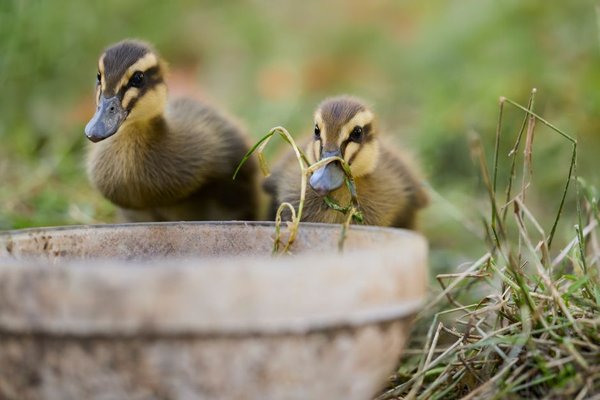
Ducks can turn a tidy feeding station into a puddle in minutes, but their messy habits are only part of what makes feeding them different from chickens. A sound duck diet needs a complete ration suited to the bird’s age, drinking water, and careful handling of greens, grit, and treats. Ducklings deserve particular attention: their rapid growth and higher niacin needs make an ordinary chick-feeding routine a poor substitute for a duck-specific plan.
Make complete feed the foundation
A commercially formulated duck or waterfowl feed is the simplest way to provide balanced energy, protein, vitamins, and minerals. Choose a complete ration for the appropriate life stage, not scratch grains or a bag of treats. Pellets work for many adult ducks; smaller crumbles are easier for ducklings to eat. Follow the manufacturer’s directions when moving between feeds, since nutritional requirements change with age and purpose.
Newly hatched birds start on duckling starter. Growing youngsters move to a waterfowl grower ration as directed by the feed label. Mature non-laying ducks need a maintenance ration, while actively laying females require a diet meeting their higher calcium demands. Avoid giving high-calcium layer feed to young ducklings or making it the sole feed for a mixed flock containing males without professional guidance.
Duckling feed: pay attention to niacin
The detail many chicken-focused guides miss is niacin for ducks. Niacin is a B vitamin needed for normal growth and leg development, and ducklings require more of it than chicks. Deficiency can contribute to weak legs, difficulty walking, and abnormal development. Those signs have other causes too, so a struggling duckling needs prompt advice from an avian veterinarian rather than guesswork with supplements.
Duckling or waterfowl starter formulated for the species is the best first choice. If only chick starter is available, check whether its niacin content meets duckling requirements and ask a knowledgeable feed supplier or veterinarian about supplementation. Do not assume every chick feed is interchangeable. Check that any medicated product is specifically approved for ducks; adding random amounts of vitamins cannot make an unsuitable ration balanced.
Ducklings also need accessible feeders and enough space for every bird to eat. Keep starter available with drinking water nearby, and replace soggy food. Good duckling brooder setup depends on safe footing and dry bedding as well as the right food.
Water belongs beside every meal
Ducks use water to swallow feed comfortably and rinse debris from their bills. Never offer dry feed without accessible drinking water. The drinker should let them dip the bill, including the nostril area, while remaining safe for their size. Young ducklings must not be able to become trapped or chilled in a deep open container.
Position the waterer on a washable tray or drained surface near the feeder to limit wet litter. Refresh water frequently, scrub slimy containers, and check that the smallest bird can drink. A swimming pond is not required for proper nutrition; clean drinking water is.
Use greens as enrichment, not replacement meals
Fresh vegetation encourages natural nibbling and foraging. Try small portions of chopped lettuce, pesticide-free tender grass, or other duck-safe leafy greens. Wash produce, discard spoiled pieces, and chop stringy material into manageable portions for young birds. Introduce new foods gradually so changes in appetite or droppings are easier to notice.
Foraging ducks pick up plants, seeds, and insects outdoors, but the nutritional value of a yard changes with weather and season. Do not reduce complete feed simply because the flock has grass. Inspect the run for chemical treatments and unfamiliar plants before free-ranging. A dependable backyard poultry feeding routine combines supervised forage with balanced daily food.
Know when ducks need grit
Insoluble grit is made of hard particles that help the gizzard grind fibrous foods and whole grains. Ducks eating only complete crumbles or pellets may not need extra grit, because the feed is already processed. Once birds eat greens, whole seeds, or other coarse foods, offer appropriately sized poultry grit in a separate container.
Choose duckling-sized particles for youngsters rather than large stones. Grit is not oyster shell: oyster shell provides calcium for laying birds, while insoluble grit helps grind food. Laying females may benefit from a separate calcium source, but do not mistake it for digestive grit.
Make duck treats an occasional extra
Suitable occasional duck treats include thawed peas, chopped greens, small pieces of vegetables, and modest amounts of insects. Serve portions small enough that the flock still eats its complete feed. For a simple enrichment activity, scatter a few thawed peas in a shallow dish of water to encourage dabbling, then remove leftovers before they spoil.
Bread, crackers, salty snacks, and sugary leftovers are poor everyday choices because they displace nutrients. Never offer moldy food or grain with an off smell. Ducks are particularly vulnerable to some mold toxins, so store feed somewhere cool, dry, and protected from pests. Check bags regularly during humid weather.
Build a feeding routine that works
Start each morning by checking water, cleaning the feeding area, and providing the correct complete ration. Watch whether every bird approaches the feeder or whether shy ducks are being pushed aside. Offer greens only after the main ration is available. At day’s end, remove damp leftovers and inspect the storage bin for moisture.
Spend five minutes observing the flock at feeding time. If one duckling consistently lags behind, limps, or cannot reach the feeder, act promptly. Better feeder placement may improve access, but changes in gait, growth, or appetite warrant veterinary attention. Regular poultry health checks begin with noticing small differences.
Frequently asked questions
Can ducks eat chicken feed?
Some chicken feeds can be used in specific circumstances, but they are not automatically equivalent. Ducklings need more niacin, and medicated feeds must be checked for duck approval. Species-appropriate complete feed is preferable.
Do ducklings need grit from day one?
Not usually when they eat only complete starter crumbles. Offer suitably small insoluble grit when introducing forage, whole grains, or other foods needing grinding.
How often can ducks have peas or vegetables?
Give modest portions as extras, not as the bulk of a meal. Remove uneaten fresh food promptly and keep the complete ration available.
Can ducks eat without a pond?
Yes. Ducks do not need a swimming pond to digest food, but must have clean drinking water that lets them rinse their bills while eating.
A balanced flock starts at the feeder
Reliable duck nutrition comes from consistent basics: age-appropriate complete feed, adequate niacin during growth, fresh water, safe greens, and grit when coarse foods require it. Keep treats occasional, store feed carefully, and notice how each bird eats. Those habits make this duck feeding guide useful long after the ducklings have grown.