
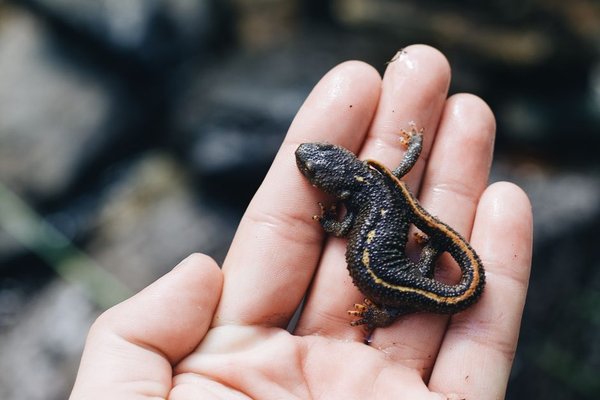
A pet newt spends much of its life where land and water meet, which makes its enclosure more demanding than a decorative aquarium. Healthy newt care begins with clean water, safe places to surface, dependable hiding spots and a suitable temperature. Requirements vary by species and life stage: some adults are aquatic, while juveniles of certain species live mainly on land. Identify your animal before choosing equipment.
Plan the Newt Habitat Around Its Natural Behavior
Begin with a spacious, escape-proof enclosure that has more floor area than height. A secure, ventilated lid matters because newts can climb surprisingly well. Tank size depends on the species, its adult dimensions and the number of occupants; larger water volume generally makes conditions easier to stabilize.
Create a water zone with an easy route out
For a primarily aquatic adult, provide freshwater for comfortable swimming while keeping a resting or haul-out area at the surface. A sloping platform, secured cork bark or smooth, stable rock can help. For a land-oriented species, prioritize moist, pesticide-free terrestrial substrate with accessible shallow water. Never assume every newt needs a half-water, half-land arrangement.
Keep filter flow gentle. Newts from quiet ponds and slow waterways should not have to fight a current to rest or feed. A sponge filter or baffled outlet can provide biological filtration without turning the tank into a stream.
Make shelter part of the layout
Include submerged plants and shaded retreats near the surface. Smooth aquarium-safe decorations and broad leaves offer security without crowding swimming space. Avoid unstable rock piles, sharp edges and gravel small enough to swallow. Bare-bottom tanks or carefully chosen substrate are easier to clean. For wider planning guidance, see amphibian habitat setup and safe terrarium substrates.
Keep Temperature Cool and Consistent
Many commonly kept temperate newts prefer cool conditions, often around 16–21°C (60–70°F), but this is not a universal target. Follow reliable species-specific guidance. Use a submersible thermometer and check daily, particularly in hot weather.
Keep the tank away from direct sunshine, radiators and warm electronics. High temperatures reduce dissolved oxygen and can stress cool-water amphibians. Air conditioning may help prevent overheating. Do not install a heater simply because tropical fish usually need one. Provide a predictable day-night cycle, shaded retreats and low-heat lighting; discuss UVB requirements with an amphibian-experienced veterinarian.
Protect Newt Water Quality Before Problems Become Visible
Clear water is not necessarily safe water. Amphibians absorb substances through their delicate skin, so chlorine, chloramine and nitrogenous waste are serious concerns. Condition tap water with a product appropriate for both chlorine and chloramine, following its directions. Leaving water standing overnight does not reliably remove chloramine; avoid distilled water as a routine habitat supply.
Cycle the filter before introducing a newt
A newt tank setup needs a functioning biological filter. Beneficial bacteria convert ammonia from waste and uneaten food into nitrite, then nitrate. Both ammonia and nitrite should read zero before an animal is introduced. Establishing this nitrogen cycle takes time; running a new filter for two days is not proof that it is ready.
Use an aquarium liquid test kit to follow ammonia, nitrite, nitrate and pH. During setup, test frequently rather than judging safety by appearance. Once established, check water parameters at least weekly and whenever appetite or behavior changes. Record results to recognize gradual deterioration.
Change some water, not the whole ecosystem
For an established filtered aquarium, a modest weekly partial water change, often around 10% or more depending on test results, is a useful starting routine. Match replacement water temperature and dechlorinate it first. Siphon out waste, but avoid sterilizing the tank or replacing all biological filter media at once. Rinse reusable filter material in removed tank water when appropriate.
Consider this practical scenario: your newt leaves half a worm behind a plant. By the following day, it can begin degrading and increasing the waste load. Remove leftovers promptly, check water readings if anything seems unusual and offer a smaller portion next time. Good newt water quality is built through small habits, not emergency deep cleans.
Feed a Varied Diet Without Polluting the Tank
Most pet newts are carnivorous and respond well to appropriately sized invertebrates. Depending on the species, options include clean, captive-cultured earthworms, blackworms, bloodworms and certain insects. Earthworms can form part of a varied diet; cut them into manageable pieces for small animals. Thaw frozen foods before offering them, and do not rely on one food exclusively.
Newt feeding frequency changes with species, age and temperature. Growing juveniles may need food more often than healthy adults, which are commonly fed several times a week. Offer an amount the animal can finish, watch whether it actually eats and remove leftovers promptly. An aquatic feeding dish can make waste easier to spot.
Avoid wild-caught insects from places where pesticides may have been used. Ask an amphibian veterinarian about calcium and vitamin supplementation rather than applying a generic reptile schedule. A related resource to explore is feeding carnivorous amphibians.
Build a Simple Care and Health-Check Routine
Spend a minute each day watching the animal before reaching into the enclosure. Check temperature, filter flow, swimming or walking, appetite and access to hides. Remove waste and leftover food promptly. Weekly, test the water, change an appropriate portion and inspect equipment for blocked inlets or leaks.
Newts are observation pets, not animals to hold for entertainment. Their skin is vulnerable to oils, soap and other residues; some species also produce defensive toxins. If moving one is unavoidable, use a suitable container or clean, powder-free gloves moistened with dechlorinated water. Keep secretions away from eyes and mouth, and wash your hands afterward.
Loss of appetite, unusual floating, skin sores, swelling or persistent lethargy warrant immediate water testing and advice from an amphibian-experienced veterinarian. Quarantine new arrivals rather than placing them directly with established animals, and never release a captive newt into the wild.
Frequently Asked Questions About Newt Care
Do pet newts need both water and land?
Many need access to both, but proportions vary by species and life stage. Confirm whether your animal is aquatic, semi-aquatic or primarily terrestrial before building its habitat.
How often should I clean a newt tank?
Remove leftovers and visible waste promptly, test water weekly and perform partial water changes based on readings. Avoid routinely emptying and scrubbing the entire aquarium, which disrupts beneficial bacteria.
Can I keep fish with my newt?
A species-only enclosure is usually safer. Fish may nip newts, compete for food, carry pathogens or require warmer, faster-moving water. Mixing species makes feeding and health monitoring harder.
A Habitat That Works Quietly Is the Goal
The best newt habitat is not the most elaborate one. It is a stable environment where the animal can hide, swim or rest as its species requires, eat varied food and remain in clean, cool water. Build around those needs, track water readings and make gradual adjustments. That steady routine is the heart of successful pet newt care.