
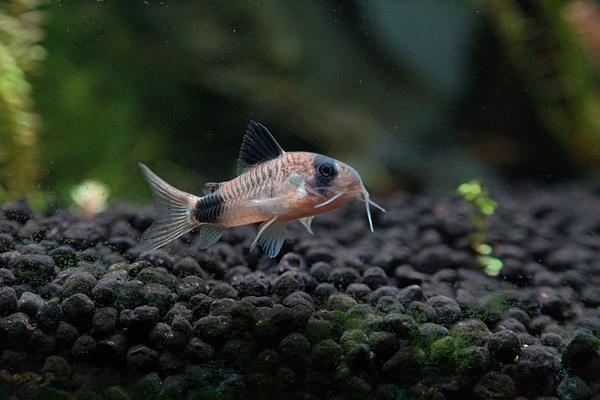
Cory catfish spend much of their day nosing across the aquarium floor, yet successful cory catfish care involves far more than adding a few “cleaner fish” to a community tank. Their comfort depends on how much floor space they have, who shares it, what they can sift through, and whether dinner actually reaches them. Get those details right and a group of corys becomes one of the liveliest parts of a freshwater aquarium.
Build the Tank Around Their Foraging Habits
A good corydoras tank setup starts at the bottom. Most commonly kept corys are peaceful, social fish that explore the substrate together, rest beneath plants, and occasionally dart upward for a gulp of air. They need room for all three behaviors, rather than a crowded floor covered entirely by decorations.
Choose Floor Space Before Extra Height
For a group of six typical bronze or similar-sized corys, a 20-gallon long aquarium is a sensible starting point. Its broad footprint offers more usable bottom area than a tall tank of comparable volume. Some pygmy species can thrive in smaller, carefully maintained aquariums, while larger species or mixed communities need more space. Check the adult size and requirements of the exact fish you buy; “cory catfish” covers many species.
Pick Substrate They Can Explore Safely
Fine, smooth sand is an excellent cory substrate because the fish can sift it naturally while searching for food. Very fine, rounded gravel can also work if it is kept exceptionally clean, but avoid sharp, jagged stones and pockets where uneaten food collects. Corys use sensitive barbels around their mouths to locate meals. Damaged barbels can be associated with rough conditions, including dirty substrate and poor water quality, not simply a particular gravel color. An aquarium substrate comparison can clarify the trade-offs.
Leave an open feeding area at the front of the aquarium, then add plants, driftwood, or caves around the edges. This gives the group somewhere to retreat without forcing it to search for food in cramped gaps. Gentle to moderate circulation, reliable filtration, and an accessible water surface complete the basic layout.
Why Cory Catfish Group Size Changes Everything
One lonely cory often hides, while a proper group tends to forage more confidently. Aim for at least six of the same species; eight or more can be even better when the tank has enough space and filtration capacity. Buying three bronze corys and three panda corys does not reliably replace a full group of either species. Although different corys sometimes mingle, keeping a strong same-species group is the safer plan.
Match the Species to the Aquarium
Bronze and albino bronze corys are familiar community choices, while panda corys generally prefer cooler conditions than some warmer-water species. Pygmy corys are smaller and often swim in the middle of the tank as well as near the bottom. Their size, behavior, and temperature preferences are reasons to research the species rather than applying one universal care sheet.
Keep Water Clean, Stable, and Well Oxygenated
For many popular corys, a temperature around 72–79°F (22–26°C) and a pH around 6.5–7.5 provide a reasonable planning range, but individual species have different tolerances. Bronze corys, for example, are adaptable across a broader range, whereas other species favor cooler or warmer water. Stability and compatibility with the chosen species matter more than chasing an arbitrary “perfect” number.
Introduce corys only after the aquarium’s nitrogen cycle is established. Test for zero detectable ammonia and nitrite, and keep nitrate controlled through sensible stocking, plant growth, and partial water changes. Use dechlorinator with replacement tap water and avoid sudden shifts in temperature or chemistry. A practical freshwater tank cycling guide can help new keepers understand why a clear-looking aquarium is not necessarily ready for fish.
Corys can briefly rise to the surface and swallow air; this is normal behavior. Repeated frantic trips, rapid gill movement, or widespread surface gasping are different. If those appear, immediately check oxygenation, temperature, ammonia, and nitrite instead of assuming the fish are simply being playful.
Feed the Corys, Not Just Their Tank Mates
Corydoras feeding is often misunderstood because these fish eagerly investigate leftover food. They are omnivores, not a substitute for aquarium cleaning, and they cannot thrive on scraps alone. Offer quality sinking pellets or wafers formulated for bottom-feeding omnivores, supplemented occasionally with appropriate frozen or live foods such as bloodworms, brine shrimp, or daphnia. Choose pieces small enough for their mouths.
Watch a feeding session from start to finish. Fast tetras or other community fish may grab food before it settles, leaving the corys hungry despite plenty of flakes being poured into the tank. Feed modest portions that the group can finish, and remove excess food before it fouls the substrate. Their rounded bellies and steady, active foraging help you assess whether the feeding plan is working.
A Simple Feeding Test for Community Tanks
Imagine a 20-gallon long aquarium with six bronze corys and a small school of tetras. Feed the tetras their appropriate food first, then place a few sinking portions in two open areas of sand. Observe whether every cory finds food without being chased away. If one corner always attracts a crowd and shy fish miss out, spread the next feeding across several spots. This adjustment often matters more than buying another type of food.
Choose Tank Mates That Respect the Bottom
Peaceful tetras, rasboras, and other similarly sized community fish can work well when their water needs overlap. Avoid aggressive or predatory fish that may nip, harass, or swallow corys. Be cautious with large, territorial bottom dwellers and with stocking combinations that leave insufficient floor space. A useful approach to choosing peaceful community fish is to compare temperament, adult size, temperature, and preferred swimming level together.
Do not assume plants and caves compensate for overcrowding. Corys need clear routes between resting places and feeding areas. If an aquarium already has territorial fish guarding the floor, rethink the stocking plan before adding a group of corys.
Frequently Asked Questions
Can I keep just two cory catfish?
Two is generally too few. Corys are social shoaling fish, so plan for at least six of the same species and make sure your aquarium accommodates the entire group.
Do cory catfish clean algae from the tank?
Not effectively. They primarily forage for small edible foods rather than grazing algae like specialist algae eaters. They still need their own balanced sinking diet and regular tank maintenance.
Is sand absolutely necessary for corydoras?
Fine, smooth sand is an excellent choice and encourages natural sifting. Clean, rounded fine gravel may suit some setups, but sharp or dirty substrate should be avoided.
Why does my cory catfish swim to the surface?
An occasional quick trip for air is normal. Frequent distressed gasping, particularly alongside rapid breathing or lethargy, calls for an immediate water-quality and oxygen check.
A Better Bottom Makes a Better Community Tank
The most dependable cory catfish care routine combines generous floor space, a proper same-species group, clean smooth substrate, stable water, and meals that reach the fish. Think through those needs before choosing decorative gravel or adding extra tank mates. When the bottom of the aquarium works for corys, their gentle exploration makes the whole community feel more active and balanced.