
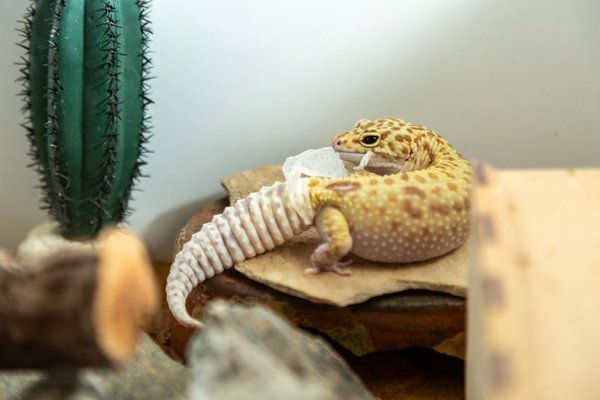
A hungry leopard gecko can make feeding look simple: offer a cricket, watch the chase, repeat. But a healthy leopard gecko diet involves more than counting bugs. The type of insect, its recent meals, the gecko’s age, and the supplements on that insect all affect nutrition.
This leopard gecko feeding guide explains how to build a manageable routine: rotate appropriately sized live prey, adjust portions to body condition, and make gut loading and calcium part of feeding rather than optional extras.
What Should a Leopard Gecko Eat?
Leopard geckos are insectivores. Their regular food should be live, captive-bred invertebrates, not salads, fruit, or human food. Many feeder insects naturally contain too little calcium relative to phosphorus, so variety and preparation matter.
Buy feeders from reputable suppliers rather than collecting insects outdoors, where pesticides and parasites are concerns. Choose prey no larger than the width of your gecko’s head as a cautious sizing guide, especially for youngsters. Provide fresh drinking water in a shallow dish daily.
Choosing Feeder Insects: Staples and Occasional Treats
Insects for regular rotation
Crickets encourage hunting and are widely available. Dubia roaches, where legal, are another practical option; appropriately sized locusts can also work. Silkworms and black soldier fly larvae, often sold as calciworms, add variety. Different feeders have different nutritional profiles, so alternating them is better than relying on one insect indefinitely.
Mealworms can also be part of a varied menu, particularly when offered in a smooth-sided feeding dish. Monitor how easily your gecko handles them. Every insect should be healthy, correctly sized, and kept in clean conditions.
Keep rich feeders occasional
Waxworms are fatty and best treated as an occasional treat rather than a staple. Superworms are large and only suitable for geckos big enough to handle them. Hornworms can add variety but are not a complete diet. A gecko that accepts only treats may benefit from a more consistent feeding routine.
How Often and How Much Should You Feed?
Age is a starting point, but appetite alone is not a portion calculator. Juveniles are growing rapidly and generally need meals more often. Healthy adults usually eat less frequently. Care recommendations vary: daily feeding is common for juveniles, while adults may do well eating every other day or around two to three times weekly.
Use body condition to fine-tune portions
For a young gecko, offer a small meal of appropriately sized insects daily and observe what it eats. For an adult, begin with a modest feeding on scheduled days, then adjust based on weight trends and veterinary advice. There is no universally correct cricket count because insects vary in size and geckos vary in metabolism.
A healthy tail stores some fat, but it should not become dramatically swollen. Watch for excess body fat or a tail that becomes noticeably thinner. Weigh your gecko regularly with a digital scale and record the results. Trends tell you more than a generic insects-per-meal chart.
For example, if an adult leaves several crickets after each feeding while its weight remains steady, offer fewer next time. Remove uneaten crickets after feeding because they can stress or bite a resting gecko. Never leave loose insects roaming overnight.
Gut Loading Insects Before Feeding
Gut loading insects means feeding them a nutrient-rich diet shortly before your gecko eats them. It improves what is inside the prey, not just the dusting on its surface. Shop-bought feeders are not automatically nutritionally balanced for reptiles.
Place feeder insects in a ventilated container and offer a reputable calcium-rich gut-loading feed for roughly 24–48 hours before serving; follow product directions. Provide safe vegetables and an appropriate moisture source, removing spoiled food promptly. Keep insects at suitable temperatures so they feed properly.
Consider maintaining two batches: one for routine care and another being gut loaded for the next meal. This rotation makes feeding quality more consistent. Gut loading complements, rather than replaces, calcium dusting.
Leopard Gecko Calcium, Vitamins, and UVB
Calcium supports bones, muscles, and normal body function. Feeder insects commonly need a light coating of reptile calcium powder immediately before being offered. A small dish of plain calcium without added vitamin D3 is also commonly provided in the enclosure, giving the gecko access between meals.
Vitamin D3 helps the body use calcium; other vitamins, including vitamin A, support health. Many keepers use a reptile multivitamin on selected feeding days rather than every meal. The right frequency depends on the product, the gecko’s age, diet, and UVB exposure. Check labels so calcium, multivitamin, and D3 products do not accidentally duplicate doses.
Appropriately installed UVB lighting supports vitamin D3 production, but lamp strength, distance, shade, and replacement schedules matter. A setup with effective UVB may need less dietary D3. Both deficiency and excess can cause harm, so have a reptile-experienced veterinarian review your supplement and lighting plan.
Twitching, weakness, swollen limbs, or a soft or distorted jaw require prompt veterinary attention; these can signal metabolic bone disease or other serious problems. A leopard gecko lighting and heating guide can help explain why nutrition and enclosure conditions work together.
Make Feeding Predictable and Safe
Feed when your gecko becomes active, often toward evening. Use feeding tongs carefully or a suitable dish, and supervise loose prey. Dust insects just before serving so the powder stays on them. Remove uneaten insects and clean the feeding dish.
Digestion also depends on appropriate enclosure temperatures. A gecko kept too cool may refuse food or digest it poorly, regardless of insect quality. Check thermometer readings before assuming a picky eater needs a new treat. A leopard gecko enclosure setup guide can help you review the basics.
Keep a simple feeding log covering insect types, meals accepted, supplements, and weekly weight. It can reveal patterns and support veterinary discussions. For a closer look at mineral choices, a reptile supplement basics guide offers a useful next step.
Frequently Asked Questions
Can leopard geckos eat only mealworms?
Mealworms can be included, but multiple suitable feeder insects provide better variety. Gut load and supplement them appropriately instead of treating any single insect as a complete diet.
Do leopard geckos need calcium at every feeding?
Calcium supplementation is generally recommended with insect meals. The exact product and schedule depend on your gecko’s needs and the supplement instructions. Check whether your multivitamin also contains calcium or D3.
Why has my leopard gecko stopped eating?
Shedding, seasonal changes, stress, and unsuitable temperatures can affect appetite. Persistent refusal, weight loss, abnormal droppings, or weakness warrants assessment by a reptile veterinarian.
Can I feed insects caught in the garden?
Avoid wild-caught prey. You cannot reliably assess its exposure to pesticides, parasites, or other contaminants. Commercially bred, correctly sized feeder insects are a safer choice.
A Balanced Routine Beats a Bigger Meal
Rotate suitable insects, gut load them, dust responsibly, and track your gecko’s body condition. Growing juveniles and adults need different schedules, but neither benefits from guesswork. Consistent care, correct temperatures, and timely veterinary advice matter more than hitting a fixed bug count.