
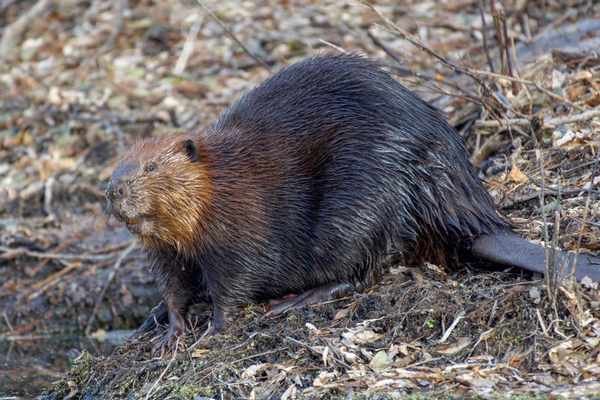
A beaver dam can turn a narrow, fast-moving stream into a quiet pond without a blueprint, machinery, or a single straight-cut plank. The builders are rodents with powerful teeth, sensitive paws, and a remarkable ability to work with flowing water. Understanding how beavers build dams reveals more than clever animal behavior: one family’s construction project can change the habitat of an entire stream valley.
Why Beavers Build Dams in the First Place
Beavers do not build dams simply because they enjoy piling up sticks. Their main goal is to create or maintain water deep enough for safe movement and shelter. On land, their bulky bodies leave them more exposed to predators. In water, they can swim quickly and reach entrances to their homes from below the surface.
A pond also makes it easier to transport branches, reach food plants, and store edible twigs underwater for winter. Where streams are shallow, a dam raises the water level. But not every beaver needs one: animals living beside an already deep lake or large river may use a bank burrow or lodge without building a dam.
How Beavers Choose a Dam Site
Before construction begins, a beaver needs flowing water, nearby food, and materials within reach. Small streams and narrow channels are often more manageable than broad, powerful rivers. A constricted section can require less wood to slow the current, while flatter ground upstream allows water to spread into a pond.
How Beaver Dam Construction Works
Cutting and Collecting the Building Materials
Beavers use their continuously growing incisors to gnaw through branches and tree trunks. Willows, aspens, and other waterside trees can supply both building material and food. The animals drag smaller pieces over land or float them along waterways. They also collect reeds, grasses, stones, and mud.
Their front paws help position material, while strong jaws carry sticks. Webbed hind feet make swimming efficient, and the broad tail assists with balance and steering. No single material does everything: wood provides a framework, and finer vegetation and mud fill spaces through which water would otherwise rush.
Anchoring Sticks Across the Current
Beavers press branches into the streambed and weave more wood into the developing barrier. Heavier pieces can help stabilize the base. They add material across the channel, building up the structure as water begins to pool on the upstream side. A dam need not be perfectly straight or completely watertight to work.
Sealing Gaps With Mud and Vegetation
As water pushes through openings, beavers pack mud, plants, and smaller sticks into vulnerable spots. The structure slows and redirects flow rather than stopping every drop. Water may seep through or spill over parts of the dam, while the pond behind it gradually becomes deeper and wider.
This layering is the central trick of beaver engineering: a rough tangle of branches becomes a functional barrier because different materials reinforce one another. A woven, mud-packed network is much harder for a stream to dislodge.
A Dam Is Never Really Finished
Water levels change with rainfall, snowmelt, and dry weather. Beavers return to repair leaks, replace displaced branches, and reinforce weak sections. A family group may share the work, and some dam sites are maintained over long periods. If one barrier cannot create enough depth, beavers may build additional dams along the same stream.
Where Beavers Actually Live
A common misconception is that beavers sleep inside their dams. The dam controls water; a lodge or bank burrow provides the living space. A lodge is a separate mound of branches and mud with a dry chamber above water level and entrances reached from underwater. Adults raise their young there and take refuge from danger.
The distinction matters in winter. In colder regions, sufficiently deep water can keep entrances accessible beneath surface ice and allow beavers to reach cached branches. Maintaining pond depth is therefore about year-round survival, not just comfort.
What Happens to a Stream After a Dam Appears?
Imagine a shallow woodland creek with fast water running between grassy banks. After a beaver family builds a dam, the upstream current slows and spreads outward. Sediment settles, the banks become wetter, and shallow edges begin supporting different plants. Within time, a simple channel can develop into a patchwork of open water, marsh, and wet meadow.
That transformation is why beavers are called ecosystem engineers. Beaver ponds can provide breeding habitat for amphibians, shelter for aquatic insects, feeding areas for waterbirds, and opportunities for fish in suitable conditions. Downed or flooded trees may also create standing deadwood used by birds and other wildlife.
The effects reach beyond visible animals. Slower water can trap sediment, influence groundwater levels, and keep parts of a floodplain moist during dry periods. Research has documented water-storage and stream-temperature benefits in some locations, although the outcome depends on the stream, climate, and surrounding landscape. To understand these connections more fully, explore how freshwater wetlands work and how river food webs depend on changing habitats.
Helpful for Wildlife Does Not Mean Trouble-Free
Beaver activity can also flood roads, block drainage structures, damage valued trees, or alter habitat needed by species that prefer unobstructed running water. Dams may affect fish movement differently depending on local conditions and the species involved. The ecological story is richer than simply calling every dam good or bad.
Wildlife managers sometimes use flow-control devices or protective fencing where people and beavers share a landscape. The aim is to manage specific conflicts while retaining wetland benefits where possible.
How to Recognize Beaver Engineering Outdoors
On a streamside walk, look for pointed stumps with tooth marks, stripped branches, waterlogged stick barriers, and ponds upstream of a constriction. A lodge may stand in the pond or against its bank. Observe from a distance and avoid walking on a dam, opening gaps, or disturbing a lodge; even a small change can affect the family’s shelter.
Frequently Asked Questions
How long does it take beavers to build a dam?
There is no fixed timetable. A small repair may happen quickly, while establishing and enlarging a dam can take much longer. Streamflow, available materials, and the number of beavers all affect the pace.
Do beavers build dams with their tails?
No. Their teeth cut and carry wood, and their mouths and front paws position materials. Their tails help with balance and movement rather than acting as construction tools.
Do all beavers build dams?
No. Beavers in deep lakes or rivers may already have the water depth they need. Dams are most useful where raising the water level creates safer access to shelter and food.
Are beaver dams permanent?
Not necessarily. Some are repaired for years, while others wash out or fall apart after beavers leave. The abandoned pond may eventually change into marsh or meadow as sediment and vegetation accumulate.
Small Builders, Landscape-Scale Results
How beavers build dams comes down to a practical sequence: select a manageable stretch of water, anchor wood, pack openings, and keep repairing the structure as conditions change. The surprising part is what follows. By making a pond for themselves, beavers create new opportunities for plants and animals that may never encounter the builders directly. Their engineering shows how an individual species can reshape an entire wetland community.