
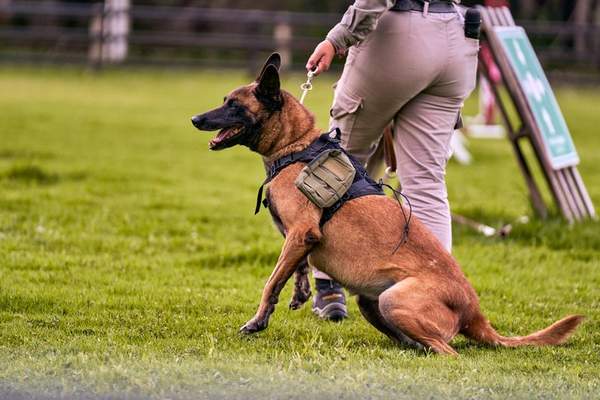
Basic obedience is less about producing a perfectly drilled dog and more about creating a shared language. When your dog understands what you are asking, daily situations become calmer and safer, from opening the front door to calling your dog away from danger. The best results come from short, reward-based sessions that make the right choice worthwhile.
Use small treats, praise, or toys as rewards. Train for three to five minutes at a time, practise in a quiet room first, and add distractions gradually. Say each cue once, then help your dog succeed. Everyone in the household should use the same word and hand signal.
1. Sit
“Sit” is often the first command taught in dog obedience training because it is simple and practical. It can replace jumping or rushing through doors.
Hold a treat close to your dog’s nose, then move it slowly upward and slightly back. As the nose follows, the bottom will usually lower. The moment your dog sits, mark the behaviour with “yes” or a click and give the reward. After several repetitions, say “sit” before the hand movement. Gradually reduce the lure until your dog responds to the verbal cue or an empty hand signal.
2. Stay
“Stay” teaches your dog to remain in position until released. Begin with your dog sitting or lying down. Show a flat palm, say “stay,” pause for one second, then reward before the dog moves. Use a separate release word such as “free” or “okay.”
Build duration, distance, and distraction one at a time. Ask for a three-second stay while standing close before taking a step away. If your dog gets up, calmly reset and make the next repetition easier. A reliable stay develops through many small successes.
3. Come
A strong recall can prevent a dog from running toward traffic, wildlife, or another animal. Start recall training indoors or in a secure garden. Crouch down, use an upbeat voice, say your dog’s name followed by “come,” and move backwards. Reward generously when your dog reaches you, and briefly hold the collar before releasing again.
Never call your dog to punish them or immediately end every enjoyable activity. Otherwise, “come” may predict disappointment. Practise with a long training line in open spaces until the response is dependable; do not test an unfinished recall off lead near hazards. A useful game is for two family members to take turns calling the dog across a room and rewarding quick responses.
4. Down
“Down” is valuable when you need your dog to settle for longer periods, such as under a café table or while visitors enter. Ask for a sit, place a treat at the dog’s nose, lower it toward the floor, then move it forward. When the elbows touch the ground, mark and reward.
Some dogs dislike this vulnerable position. Do not push on the shoulders or pull the front legs. Try training on a comfortable rug, reward smaller movements toward the floor, and keep your body turned slightly sideways. Once the movement is fluent, add the word “down” before the hand signal.
5. Leave It
“Leave it” means disengage from something before picking it up. Place a low-value treat in a closed fist and let your dog investigate. The instant the dog backs away or looks elsewhere, mark the choice and reward from your other hand. Then add the cue before presenting the closed fist.
Progress to an item under your foot, then an uncovered item at a safe distance while your dog is on lead. Reward with something different rather than allowing the dog to take the object they were told to leave. This command helps around dropped food, rubbish, medicines, or wildlife, but dangerous items must still be kept out of reach.
6. Heel or Walk With Me
For family dogs, a practical “walk with me” cue is often more useful than a formal competition heel. The goal is for your dog to move beside you on a loose lead and check in. Begin indoors. Reward your dog for standing near your chosen side, take one or two steps, then reward again while the lead remains slack.
Increase the number of steps gradually. If the lead tightens, stop or change direction instead of dragging the dog forward. Reward when your dog returns to position. Practising before outdoor walks reduces frustration. Guidance on breed-specific dog training can help owners adapt rewards and session length to different temperaments.
7. Place
“Place” sends your dog to a defined spot, a bed or mat, and asks them to remain there until released. It is useful during meals, deliveries, cooking, or busy family moments. Put the mat nearby, reward interest in it, then reward paws on it. Once your dog steps onto it willingly, say “place” just before they move toward it.
Next, reward a sit or down on the mat and build duration slowly. Keep the mat positive; it should not feel like punishment. A puppy crate-training guide and a calm-settling routine are useful next steps because both reinforce relaxing in a designated area.
How to Make the Commands Reliable
Knowing sit, stay, come, down, leave it, heel, and place in the kitchen is only the beginning. Dogs do not automatically apply lessons everywhere. Practise in several rooms, then in the garden, on a quiet pavement, and eventually around controlled distractions. Reduce distance or difficulty whenever the environment becomes harder.
Once a behaviour is established, vary the rewards. Sometimes give food, sometimes praise or a game, and occasionally offer a larger reward for an excellent response. This keeps the sit stay come sequence and other commands engaging without requiring a visible treat every time.
Frequently Asked Questions
How long does it take a dog to learn basic obedience commands?
Many dogs understand the first step within a few short sessions, but reliability takes weeks or months of consistent practice. Age, temperament, health, and distractions affect progress.
What should I do if my dog ignores a command?
Avoid repeating the cue or raising your voice. Move to a quieter area, use a better reward, and return to an easier version. Consider whether your dog is tired, anxious, uncomfortable, or confused.
Can an older dog learn these commands?
Yes. Adult and senior dogs can learn through reward-based training. Keep sessions comfortable and adjust movements for mobility, hearing, or vision limitations.
Should I use treats every time?
Use frequent rewards while teaching a new skill. Once the response is reliable, gradually vary the reward while continuing to praise good choices. Food can come from your dog’s normal daily ration to prevent overfeeding.
Build Skills Into Everyday Life
The seven basic obedience commands every dog should know become valuable when woven into normal routines. Ask for a sit before opening a door, practise stay while placing a food bowl down, use leave it on walks, and reward calm behaviour on the dog’s mat. These small repetitions turn training into a daily conversation rather than a separate chore. With patience, clear cues, and fair rewards, your dog learns the commands and the habit of looking to you for guidance.