
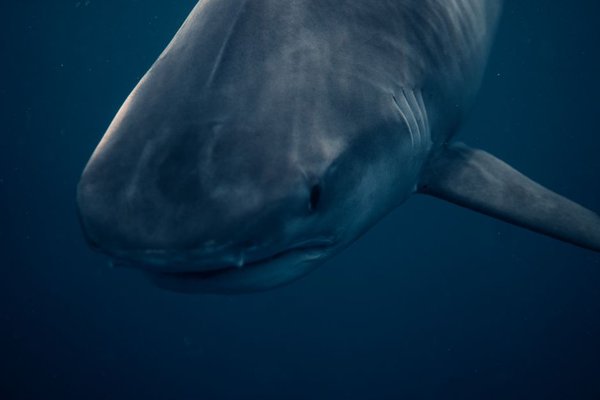
Great white sharks in the United States are not confined to one famous stretch of coastline. They move through Atlantic and Pacific waters, visit feeding grounds at different times of year, and use different habitats as they grow. A shark cruising near Cape Cod in September and a young white shark swimming off Southern California in July may be the same species, but their immediate needs are quite different.
Water temperature, available prey, age and seasonal movement all help explain where these remarkable predators appear along America’s shores.
Where Do Great White Sharks Live in the United States?
The great white range covers much more of the country than most beachgoers realize. NOAA Fisheries documents white sharks along the U.S. Atlantic from Maine into the Gulf of Mexico and Caribbean waters, and across the Pacific from Alaska toward California and Hawaii. That broad distribution does not mean they are equally common everywhere.
Atlantic Coast: Cape Cod to the Southeast
Massachusetts, particularly the outer beaches of Cape Cod, is a well-known summer and autumn feeding area. Recovered gray seal populations provide prey for large white sharks, which sometimes hunt surprisingly close to shore. Farther south, sharks occur along the Mid-Atlantic coast, the Carolinas and Florida, although their presence shifts seasonally.
Long Island and nearby waters also matter for young white sharks. Researchers have identified nursery habitat around New York, showing that the Northeast is not merely a place where mature predators arrive to feed on seals.
Pacific Coast: California’s Two Shark Worlds
California offers a revealing contrast. Larger white sharks gather seasonally near seal and sea lion concentrations around the Farallon Islands, Point Reyes and Año Nuevo. This central California zone is sometimes called the Red Triangle.
Meanwhile, shallow waters off Southern California serve as important habitat for juveniles. Young sharks may be seen near beaches during warmer periods, hunting fish and rays rather than seals.
How Seasonal Migration Changes the Map
Great white migration follows broad ecological patterns, not a fixed calendar that every shark obeys. In the western Atlantic, tracking and historical records show many sharks concentrating farther north during summer, then shifting toward the southeastern United States and sometimes the Gulf during colder months. Spring and autumn are transition periods with a more widespread distribution.
In the northeastern Pacific, many adult and subadult sharks leave coastal feeding areas and travel far offshore. Some visit an open-ocean region between California and Hawaii nicknamed the White Shark Café. Scientists are still investigating why the area attracts them.
A tracking map can make these movements look like a straightforward commuting route. Real journeys are less tidy: individuals change depth, pause in feeding areas and sometimes follow paths that differ from the seasonal trend. A guide to great white migration can help explain these long-distance journeys in more detail.
White Shark Habitat Changes With Age
White shark habitat is closely tied to life stage. Newborn and juvenile sharks often use relatively warm, shallow continental-shelf waters, where coastal fish, small sharks and rays provide manageable prey. These areas can function as nurseries, although scientists are still learning where females give birth.
As white sharks become larger, their movements often encompass both offshore waters and coastal places where marine mammals congregate. They can maintain parts of their bodies warmer than the surrounding sea, helping them hunt in cooler water.
That difference matters when interpreting a sighting. A small shark in a Southern California nursery area is not necessarily behaving like a large seal-hunting shark off Massachusetts.
What Great White Sharks Eat and How They Hunt
Young great whites commonly feed on fish, rays, smaller sharks and squid. Adults can take larger prey, including seals and sea lions, while continuing to eat fish. They may also scavenge on whale carcasses. Their menu is varied, and not every encounter with a marine mammal ends in a successful hunt.
Great whites are ambush predators. Their dark upper surfaces help them blend into deeper water when viewed from above, while their powerful bodies support sudden acceleration. Their developed senses help them locate prey, although behavior is never completely predictable.
At Cape Cod, the relationship between seals and white sharks is a vivid example of how food shapes distribution. Where seals congregate, sharks may hunt in relatively shallow water, even when people think of that water as a swimming area. White shark diet is a useful related topic for exploring this relationship.
What Beach Visitors Should Know
Shark bites remain uncommon, but the risk is real wherever people and large predators share coastal water. Before entering the water at Cape Cod, check current beach notices and shark flags, and follow lifeguard directions.
Consider an autumn beach visit when seals are visible beyond the surf. Even if the water is calm and nobody has reported a shark that morning, swimming near the seals is a poor choice. The National Park Service advises avoiding seals and schools of fish, staying out of murky water, keeping close enough for rescuers to reach you, and swimming with others.
Tracking-app locations are not an all-clear signal: only some sharks carry transmitting tags. Local warnings and conditions should guide decisions to swim. More detailed shark safety guidance is worth reviewing before visiting known feeding areas.
How Scientists Study and Protect U.S. White Sharks
Researchers use satellite and acoustic tags, photo identification and long-term observations to investigate movement, feeding areas and population trends. These tools have improved the picture of great white sharks USA-wide, but cannot provide a complete census or locate every shark in real time.
White sharks are protected from harvest in most U.S. fisheries, and accidental catches are subject to release requirements. NOAA reports evidence of increasing abundance in parts of the Atlantic and northeastern Pacific, while emphasizing that formal population status and many biological details remain uncertain. Their slow growth and late maturity make protection especially important.
Frequently Asked Questions
Which U.S. state has the most great white sharks?
There is no definitive state-by-state count. Massachusetts and California have prominent seasonal aggregations and substantial research programs, but sightings and tag detections do not establish which state has the largest total population.
Are great white sharks found in Florida?
Yes. White sharks occur off Florida as part of the broader seasonal distribution of western Atlantic sharks. Their presence varies by individual and time of year.
When are great whites most common near Cape Cod?
They are most associated with summer and autumn, when seal-rich coastal feeding areas attract sharks. Seasonal patterns do not guarantee a shark-free period.
Do great white sharks stay near the coast?
No. They use both nearshore and offshore waters. Juveniles often spend considerable time in coastal nursery habitats, while larger sharks may travel long distances across the open ocean.
A Moving Picture of America’s White Sharks
The best way to understand great white sharks in the United States is to connect place, season and life stage. Cape Cod’s seal-rich waters, Southern California’s juvenile habitats and offshore Pacific migration routes are part of the same story: predators move to find conditions and food that suit them. As tracking research continues, the picture will become clearer without making the ocean any less wild.