
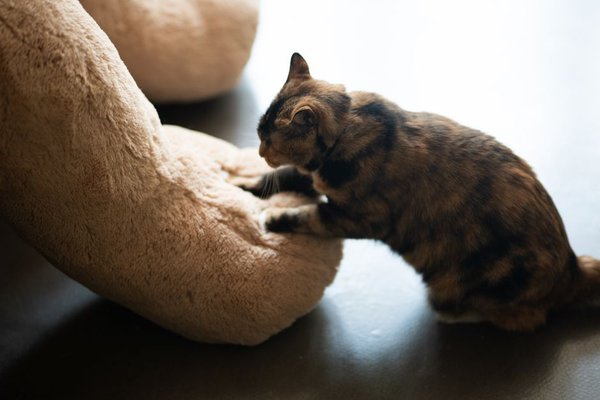
Your cat climbs onto a blanket, presses one front paw into it, then the other, and settles into a steady rhythm. Sometimes there is purring. Sometimes there is a blissful, faraway expression. The behavior looks like kneading bread dough, which explains the nickname “making biscuits.” But why cats knead is more interesting than the nickname suggests.
Kneading begins with an instinct kittens use while nursing. In adulthood, the same movement may accompany comfort, familiar routines, scent communication, or preparation for a nap. There is no single explanation for every cat or every occasion. The useful clue is what happens before, during, and after those alternating paw presses.
The Habit Starts Long Before a Cat Meets a Blanket
Newborn kittens knead against their mother’s abdomen while feeding. This rhythmic pressure helps stimulate milk flow. It happens in a setting rich with warmth, contact, food, and familiar scents. The movement develops alongside some of a kitten’s earliest reassuring experiences.
When a cat grows up, the original feeding function is no longer needed, but the motor pattern can remain. An adult pressing its paws into a fleece throw is not necessarily trying to nurse. It may simply be performing a familiar action associated with feeling settled. That is why cat kneading behavior can look almost automatic.
Soft Surfaces Can Become a Comfort Cue
For many adult cats, kneading is part of unwinding. A thick blanket offers resistance beneath the paws, while a warm lap adds body heat and social contact. Those sensations can make a resting place particularly inviting.
Consider a cat that ignores the sofa all afternoon but kneads the same fleece blanket every evening. Dinner is over, the room is quiet, and someone familiar has sat down nearby. Rather than representing one mysterious message, kneading may be part of a reliable winding-down routine.
This is a helpful way to understand feline comfort behavior: the cat responds to a whole situation, not merely to fabric. Familiar smells, predictable surroundings, and a preferred place to rest may all contribute. Some cats purr or nuzzle a blanket while kneading; others remain silent.
Why Cats Knead People, Not Just Pillows
A lap combines two things cats often enjoy: a soft surface and a familiar companion. If your cat steps onto you, kneads briefly, turns around, and curls up, it may be arranging a comfortable resting spot while enjoying your company.
People often call this a sign of love, and that interpretation can fit a relaxed, sociable interaction. Still, kneading is not a precise declaration with one fixed meaning. A cat may knead a favorite cushion just as enthusiastically when nobody is watching.
Read the wider picture. Loose posture, relaxed ears, gentle blinking, and voluntarily remaining close are more informative than the paws alone. Understanding cat body language helps distinguish a pleasant social moment from a cat that simply wants to settle somewhere soft.
There May Be a Scent Message in Every Step
Cats communicate partly through scent. They have scent-producing glands associated with their paws, so contact with a surface can leave chemical traces that people generally cannot detect. Kneading may therefore contribute to marking a familiar resting place.
That does not mean your cat is making a dramatic territorial claim whenever it kneads your sweater. Scent marking and comfort are not mutually exclusive. A cat can enjoy an object and also reinforce its familiarity through repeated contact. This is one reason how cats communicate through scent is such a revealing subject.
Is Kneading Also a Way to Prepare a Bed?
Another explanation links kneading to resting-place preparation. Wild felines may press down vegetation or rearrange bedding before lying down. Domestic cats sometimes behave similarly, kneading a surface before circling and curling up.
This ancestral connection is plausible, but it is better treated as a theory than as a proven explanation for every kneading session. The immediate pattern is often clearer: your cat pushes at the blanket, changes position, and goes to sleep.
How to Interpret Your Own Cat’s Kneading Routine
Instead of asking only why cats make biscuits, watch when they open their imaginary bakery. Small observations can reveal a surprisingly consistent pattern.
Notice the setting
Does kneading happen on one particular blanket, after your cat approaches you, or just before sleep? These details suggest whether texture, companionship, or a resting routine is involved.
Notice what follows
A cat that kneads and then curls up is probably incorporating the movement into settling down. One that kneads while being gently petted may be responding to a comfortable social interaction. The purposes can overlap.
Notice individual preferences
Some cats extend their claws; others keep them tucked away. Some alternate their paws slowly, while others knead briskly. Comparing one cat with another is less useful than learning what is typical for yours. The related question of why cats purr is similar: context matters.
Enjoying the Ritual Without Getting Scratched
A contented cat may accidentally dig sharp claws into your legs. You do not have to discourage kneading itself. Keep a folded, thick blanket beside your usual seat and slide it between the cat’s paws and your lap before kneading starts.
If your cat has a favorite fabric, try that specific material rather than expecting any cushion to work. Let the cat choose whether to stay. Punishment can interrupt an otherwise relaxed interaction without teaching the cat where you would prefer its paws to go.
Frequently Asked Questions
Why does my cat knead me and purr at the same time?
Kneading and purring commonly occur together during relaxed moments. Your lap may provide warmth, security, and social contact, while kneading repeats a familiar movement from kittenhood. Look at your cat’s posture rather than assuming the combination has only one meaning.
Why does my cat knead a blanket before sleeping?
The blanket may feel comforting, carry familiar scents, or offer a surface your cat likes to press into before settling. Kneading can also resemble the action of adjusting a resting place. Several explanations may apply.
Do cats knead because they were weaned too early?
Not necessarily. Kneading is common in cats with ordinary early development, too. Some retain nursing-related actions more strongly than others, but kneading alone does not tell you when or how a cat was weaned.
Why doesn’t my cat knead at all?
Cats vary in how often they knead and what prompts it. A cat may prefer other ways of relaxing or interacting, such as curling up nearby or rubbing against familiar people. Little kneading is not evidence of a weaker bond.
A Familiar Movement With Several Meanings
Kneading connects a cat’s earliest feeding behavior with the comforts of adult life. It may help a cat settle, accompany a pleasant interaction, reinforce familiar scents, or precede sleep. These explanations overlap because real behavior rarely fits into a single category.
Next time your cat presses its paws into a blanket, notice the scene around it. The quiet room, familiar fabric, and sleepy stretch afterward may tell you more than the paw movements alone. Sometimes making biscuits is simply part of feeling at home.