
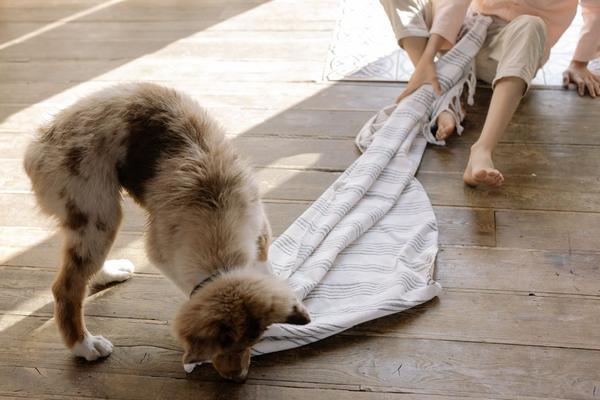
When a dog seems restless at home, the answer is not always a longer walk. Dogs also benefit from chances to sniff, search, chew, solve problems and make choices. Good enrichment gives those natural behaviours a safe outlet and makes ordinary days more interesting.
The best dog enrichment activities at home are simple, repeatable and easy to adjust for age and confidence. Food-based games should usually come from your dog’s normal daily allowance. Start easy, supervise closely and increase the challenge gradually.
20 Easy Dog Enrichment Activities to Try at Home
1. Scatter Feed a Meal
Scatter part of your dog’s dry food across a clean floor, garden or safe patch of grass. Searching piece by piece encourages natural foraging and turns a fast meal into a scenting task.
2. Make a Snuffle Towel
Sprinkle kibble across a towel, then loosely roll or fold it. Your dog has to use their nose and paws to find the food. Supervise dogs that like to chew fabric.
3. Hide Treats Around One Room
Ask your dog to wait while you place a few treats in easy spots, then release them to search. Make hiding places harder only after they understand the game.
4. Use a Puzzle Feeder
Puzzle feeders turn a quick meal into problem-solving. Choose one suited to your dog’s size and experience. If frustration replaces curiosity, switch to an easier puzzle.
5. Stuff a Rubber Food Toy
Fill a durable hollow toy with part of your dog’s meal or dog-safe food. Once your dog understands it, chilling or freezing the filling can make the activity last longer.
6. Build a Cardboard Search Box
Place scrunched paper in a sturdy cardboard box and scatter kibble between the layers. Remove tape and staples, and supervise any dog that may swallow cardboard.
7. Play “Find the Toy”
Hide a favourite toy and encourage your dog to locate it. Start with the toy partly visible. This provides mental stimulation for dogs that prefer play to food.
8. Teach the Name of a Toy
Repeat one toy’s name during short play sessions and reward your dog for choosing it. Later, place it beside another toy and ask for the named object.
9. Try the Cup Game
Place a treat under one of two or three lightweight cups while your dog watches. Let them choose, then shuffle positions as they improve. Use safe, non-breakable cups.
10. Create a Treat Trail
Make a short trail of tiny food pieces leading to a hidden reward. As your dog gets better, space treats farther apart or add gentle turns around furniture.
11. Do a Five-Minute Training Session
Practise sit, down, hand target, spin or another easy skill using rewards. Short sessions can be excellent enrichment when the dog is successful and engaged.
12. Teach a New Trick
Try putting paws on a low platform, ringing a bell or placing a toy in a box. Break the behaviour into small steps and reward progress rather than perfection.
13. Rotate the Toy Basket
Store some toys and swap them every few days instead of leaving everything out. A familiar toy can feel interesting again after a break.
14. Set Up a Safe Dig Box
Fill a box with scrunched paper and hide a few treats or toys inside. This gives dogs that love digging an approved place to rummage and search.
15. Make an Indoor Obstacle Course
Use cushions, low boxes and open spaces to create a gentle route. Avoid slippery floors, high jumps and unstable furniture, especially for puppies, seniors or dogs with joint problems.
16. Play Tug With Rules
Use a suitable tug toy, include pauses and teach a simple release cue with rewards. Stop the game if teeth repeatedly contact skin or arousal becomes excessive.
17. Offer an Appropriate Chew
Chewing can be calming and satisfying. Choose something suitable for your dog’s size, chewing style and health, and remove it if pieces begin breaking off.
18. Let Your Dog Choose the Game
Put two safe toys or activities down and see which one your dog approaches. Choice can be enriching too. If your dog walks away, they may simply prefer rest.
19. Watch the World From a Safe Spot
Some dogs enjoy observing gentle activity from a secure window or doorway. If watching triggers barking, pacing or tension, block the view and offer a calmer activity.
20. Create a Weekly Enrichment Rotation
Use a different activity each day instead of trying everything at once. For example, offer a puzzle feeder on Monday, scent work on Tuesday and trick training on Wednesday.
How to Keep Enrichment Safe and Useful
Enrichment should match the individual dog. Puppies often need easier games and closer supervision, while older dogs may prefer low-impact scent work. Anxious dogs may do better with predictable activities than noisy challenges.
Dogs Trust and Blue Cross recommend variety, supervision and opportunities for natural behaviours such as sniffing, searching and problem-solving. When treats or kibble are used frequently, reduce normal meal portions so enrichment does not quietly add excess calories.
A practical tip is to watch what happens after an activity. A useful game often leaves a dog calmly satisfied. If your dog becomes frantic, guards the item or starts destroying materials, simplify the setup or choose something else.
Related topics worth exploring include reward-based dog training, indoor games for rainy days and choosing safe puzzle toys for dogs.
Frequently Asked Questions
How much enrichment does a dog need each day?
There is no single amount for every dog. A few short sessions can be useful alongside exercise, rest and social time. Let your dog’s interest and behaviour guide the routine.
Can enrichment replace a walk?
Usually not. Enrichment adds valuable mental activity, but most dogs still need suitable physical exercise and chances to explore outside.
Are puzzle feeders good for every dog?
Many dogs enjoy them, but difficulty matters. If your dog becomes frustrated, guards the toy or tries to destroy it, choose a simpler activity and supervise.
What is the easiest activity to start with?
Scatter feeding is one of the simplest options. Use part of your dog’s normal food, start in a small safe area and let them search at their own pace.
Make Enrichment Part of the Routine
Dog enrichment does not require expensive equipment. The most useful activities are the ones your dog enjoys and you can repeat safely. Mix scent work, food puzzles, training, chewing, play and choice across the week, then adjust the difficulty as confidence grows. Small changes to a home routine can give a dog far more to think about without making life complicated.