
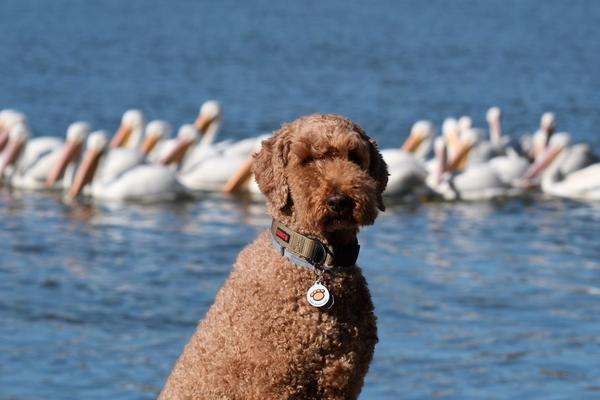
Ask ten dog lovers to name a doodle breed and you’ll probably hear the same three answers: Goldendoodle, Labradoodle, Bernedoodle. That’s not an accident. Doodles have become one of the fastest-growing categories in the mixed-breed world, and a lot of that growth traces back to something less obvious than their curly coats — their intelligence. Poodles were bred as working retrievers, and that sharp, trainable mind shows up again and again in their doodle offspring. It’s part of why you’ll see doodles working as service dogs, therapy animals, and emotional support companions far more often than most other mixed breeds.
But “doodle” isn’t one breed with different names. Each cross brings its own size range, coat behavior, energy level, and personality quirks depending on which second breed it’s paired with a Poodle. If you’re comparing goldendoodle vs labradoodle vs bernedoodle and trying to figure out which one actually fits your household, the differences matter more than the family resemblance.
Size and Physical Build
All three breeds come in a range of sizes because breeders cross Poodles of different sizes (standard, miniature, or toy) with the other parent breed. That said, there are typical patterns worth knowing.
Goldendoodle
Standard Goldendoodles usually land between 50 and 90 pounds, with miniature versions dropping to 15-35 pounds. They tend to have a sturdy, athletic frame inherited from the Golden Retriever side, with a slightly longer muzzle and floppy ears.
Labradoodle
Labradoodles follow a similar size spread, though standard Labradoodles can run a touch leaner and more athletic than Goldendoodles, closer to the Labrador’s build. Miniature and medium Labradoodles are popular for people who want the temperament without the size.
Bernedoodle
Bernedoodles are the outlier here. Because Bernese Mountain Dogs are a large, heavy-boned breed, standard Bernedoodles often weigh 70-90 pounds and carry noticeably more bulk and a broader chest than the other two. Even mini and tiny Bernedoodles tend to look stockier than their Goldendoodle or Labradoodle counterparts of the same weight.
Coat Type and Shedding
This is usually the deciding factor for families searching for a hypoallergenic doodle, so it deserves a closer look.
None of these breeds are 100% hypoallergenic — no dog truly is — but all three can produce coats that shed far less than their non-Poodle parent, especially in dogs with higher Poodle genetics (multigenerational or “F1B” crosses). Goldendoodles and Labradoodles both range from wavy “fleece” coats to tighter curls, and the wavier the coat, the more likely it is to shed at least a little. Bernedoodles, thanks to the Bernese Mountain Dog’s double coat, tend to shed slightly more than a high-percentage Poodle-cross Goldendoodle or Labradoodle, even when their coat looks curly.
If allergies are a serious concern in your home, ask breeders specifically about the generation (F1, F1B, F2B, multigen) and coat type, not just the breed name. A Goldendoodle or Labradoodle with more Poodle ancestry will generally shed less and produce less dander than an F1 (50/50) doodle of any type.
Temperament and Trainability
Here’s where the Poodle influence really shines through. All three breeds inherit strong intelligence and trainability, which is exactly why doodles show up so often in service and therapy dog programs.
Goldendoodles tend to be the most eager-to-please of the three, blending the Golden Retriever’s friendliness with Poodle smarts. They’re typically social with strangers and other dogs, and they train quickly with positive reinforcement.
Labradoodles are similarly outgoing but often bring a bit more of the Labrador’s boundless energy and playfulness, especially as puppies. They can be a little more food-motivated and food-driven in training, which some owners find makes them even easier to work with.
Bernedoodle temperament tends to be calmer and more laid-back once past puppyhood, with a gentle, affectionate streak inherited from the Bernese Mountain Dog. They’re often described as more “velcro” dogs, forming close bonds with their family and sometimes showing mild wariness around strangers — a trait less common in the other two breeds. This makes Bernedoodles a strong choice for households that want a loyal, low-drama companion rather than a highly social extrovert.
Exercise and Energy Levels
Labradoodles generally need the most daily exercise of the three, reflecting the Labrador’s working retriever roots — expect to commit to regular runs, fetch sessions, or long walks. Goldendoodles need a similar but slightly more moderate amount of activity. Bernedoodles, despite their large size, are often satisfied with more moderate exercise, making them a decent fit for owners who want a big dog without needing to run a marathon with it every day.
Grooming Needs
All three breeds require regular grooming to prevent matting, typically every 4-8 weeks at a groomer plus brushing at home several times a week. Bernedoodles, with their thicker double-coat influence, often need slightly more frequent brushing to stay mat-free, especially around the ears and legs.
Price Differences
Pricing varies a lot by breeder, location, and generation, but as a general pattern, Bernedoodles tend to carry the highest price tags of the three, often due to lower litter sizes and high demand for the breed. Goldendoodles and Labradoodles are usually priced similarly to each other, though specific coat colors, sizes, and health testing can push prices in either direction regardless of breed.
Which One Fits Your Home?
If you want a highly social, people-pleasing dog that’s great with kids and strangers alike, a Goldendoodle is hard to beat. If your household is active and you want a dog that matches high energy with strong trainability, a Labradoodle often fits better. And if you’re drawn to a calmer, more devoted companion and don’t mind a slightly bigger dog with a bit more shedding, Bernedoodle temperament tends to suit families looking for a gentle giant rather than a bouncy extrovert.
Frequently Asked Questions
Which doodle breed sheds the least?
Generally, high-Poodle-percentage Goldendoodles and Labradoodles shed the least, while Bernedoodles tend to shed slightly more due to their Bernese Mountain Dog ancestry. Coat generation matters more than breed name alone.
Are Bernedoodles good with kids?
Yes, Bernedoodles are typically affectionate and gentle with children, though their calmer, more reserved temperament around strangers means early socialization is important.
Is a Goldendoodle or Labradoodle easier to train?
Both are highly trainable thanks to their Poodle heritage. Labradoodles are often slightly more food- and play-motivated, while Goldendoodles tend to be a bit more eager to please, so the “easier” choice often comes down to your individual dog and training style.
Which doodle breed is best for allergies?
No dog is fully hypoallergenic, but F1B or multigenerational Goldendoodles and Labradoodles with higher Poodle percentages usually produce the least dander and shedding, making them a common choice for allergy-sensitive households.
At the end of the day, all three doodle breeds share the same intelligent, trainable core that’s made them so popular — the differences come down to size, coat, energy, and temperament fitting your specific lifestyle. Spend time with breeders who health-test their dogs, ask detailed questions about coat generation, and you’ll find the doodle that fits your home rather than just the one that’s trending.