
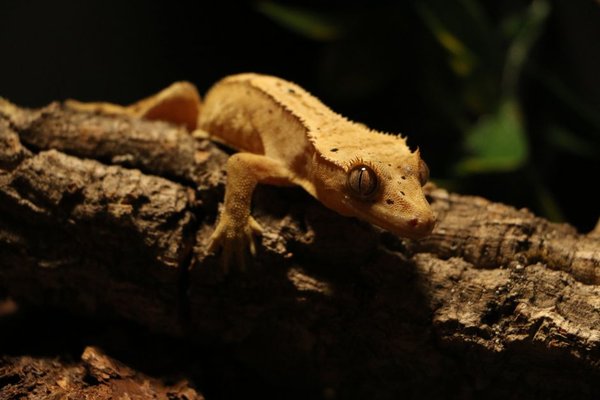
A crested gecko can spend an afternoon tucked behind a leaf, then emerge at dusk to leap between branches. That contrast is the key to good crested gecko care: the enclosure must offer security by day and room to explore after dark. These tree-dwelling lizards from New Caledonia need climbing routes, temperature choices, balanced food, and a routine that lets their habitat dry between mistings.
Build a Habitat Around Height, Not Floor Space
A crested gecko habitat should be taller than it is wide. For one adult, an enclosure measuring at least 18 by 18 by 24 inches (approximately 45 by 45 by 60 cm) is a starting point; larger, well-furnished vertical enclosures offer more choice. Choose a secure, ventilated terrarium. House crested geckos individually to avoid territorial disputes, injuries, and feeding competition.
Fill the middle and upper levels with sturdy branches, cork tubes, vines, and nontoxic foliage. Arrange horizontal and diagonal perches so the gecko can travel without repeatedly jumping across empty space. Include shaded hiding places at different heights. A bare crested gecko tank may look spacious, but it offers little usable living space.
For the floor, consider coconut coir or reptile-safe soil that holds moisture without staying soaked. Remove loose debris and check that decorations cannot trap toes or collapse. A reptile habitat setup checklist is useful for reviewing ventilation, climbing access, and safety before introducing your pet.
Get Temperature and Lighting Right
Most crested geckos do well with daytime areas around 72–78°F (22–26°C), with a slightly warmer choice and a cooler retreat. A nighttime drop is natural; temperatures around 65–72°F (18–22°C) are commonly suitable. Prolonged temperatures above about 82–84°F (28–29°C) can be dangerous.
Place digital thermometers at different heights and use a thermostat with any heater. Keep the terrarium out of direct sunlight, which can overheat glass quickly. If extra heat is unnecessary, do not install a powerful basking bulb merely because other reptiles use one.
Provide a predictable day-night cycle, roughly 12 hours of light followed by darkness. Appropriate low-level UVB exposure supports calcium metabolism, but lamp selection, screening, distance, and shaded areas matter. Seek species-specific guidance; a reptile UVB lighting guide can explain why bulb strength alone does not determine safe exposure.
Manage Crested Gecko Humidity as a Daily Cycle
Crested gecko humidity should rise after misting and then fall as the enclosure dries. A practical pattern is an evening increase toward roughly 70–80%, followed by a decline to around 40–50% before the next substantial misting. Readings vary by location, so use a digital hygrometer and watch the trend rather than chasing one constant number.
For example, mist leaves and enclosure walls in the evening, when your gecko becomes active. Check the reading the next afternoon. If bedding and foliage stay dripping wet all day, improve airflow or reduce misting. Constant dampness encourages mold and may contribute to skin or respiratory problems.
Supply a shallow dish of fresh water even if your gecko licks droplets from leaves. Moisture-holding substrate and dense foliage help buffer changes, but cannot replace measurement. During shedding, ensure the animal has access to a humid hiding area.
Choose Balanced Crested Gecko Food
A high-quality, nutritionally complete commercial crested gecko diet, usually a powder mixed with water, is a practical dietary foundation. Follow its mixing instructions. Offer juveniles food more frequently, often daily, while many healthy adults eat prepared diet every other evening. Appetite and portions vary with age, growth, and veterinary advice.
Place food in a dish on an elevated ledge where the gecko travels. Replace leftovers within about 24 hours, particularly in warm, humid conditions. Small licking marks can be easy to miss; tracking weight over time gives a better picture of whether a growing gecko eats enough.
Gut-loaded feeder insects, such as appropriately sized crickets or dubia roaches, provide variety and encourage hunting. Offer them in moderation and use calcium supplements according to the complete diet, UVB setup, and veterinary guidance. Remove uneaten insects promptly. Do not rely on mashed fruit or sweet baby food as the main diet: they cannot reliably supply balanced protein, calcium, and other nutrients.
Handle Gently and Let the Gecko Set the Pace
Give a newly arrived gecko at least a week to settle before attempting routine handling. Begin short sessions over a bed or another soft, low surface. Let the gecko walk onto an open hand, then bring your other hand forward as it climbs. This hand-to-hand movement is safer than restraining a gecko that wants to jump.
Never lift a crested gecko by its tail. A frightened gecko can drop its tail, and unlike many other lizards, it will not regrow. Stop if the animal repeatedly bolts or struggles. Avoid handling during difficult sheds, and wash your hands afterward because reptiles can carry Salmonella.
Make Cleaning and Health Checks Routine
Remove feces, spoiled food, and fouled water daily. Clean bowls regularly, check decorations for mold, and periodically disinfect the enclosure with a reptile-safe product as directed. Rinse treated surfaces before your gecko returns. Keep a record of weight, appetite, shedding, and environmental readings.
A healthy gecko is generally alert when active, grips climbing surfaces securely, and maintains stable body condition. Watch for repeated food refusal, weight loss, swollen limbs or jaw, persistent stuck shed around toes, unusual breathing, or weakness. Those signs need prompt assessment by an experienced reptile veterinarian. A guide to reptile health warning signs can help organize observations before an appointment.
Frequently Asked Questions
How often should I mist a crested gecko tank?
Often once in the evening, with additional light misting only when readings justify it. Let humidity fall and surfaces partly dry between sessions rather than keeping everything wet continuously.
Do crested geckos need a heat lamp?
Not always. If the enclosure stays within a suitable temperature range, extra heat may be unnecessary. Any heater needs a thermostat, and the gecko must be able to move into cooler areas.
Can crested geckos live together?
Individual housing is the safest general recommendation. Sharing an enclosure can cause stress, fighting, competition, or unintended breeding, even when serious problems are not immediately obvious.
Why is my crested gecko hiding all day?
Daytime hiding is normal for this largely nocturnal species. Check the enclosure if hiding comes with weight loss, inactivity after dark, or other changes in behavior.
A Sustainable Care Routine
Successful crested gecko care comes from consistency rather than constant intervention. Create a leafy vertical habitat, monitor heat and humidity, serve a complete diet, and let the gecko choose when to explore or interact. When those basics are right, even a quiet gecko tucked behind a leaf is often doing exactly what it should.