
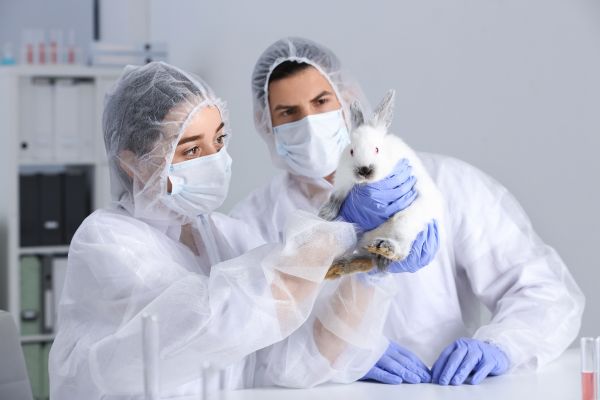
For generations, animal experiments have been treated as a standard part of scientific research. New medicines, household chemicals, cosmetics, and medical procedures have often been tested on animals before reaching people. The practice was built on a familiar idea: studying a whole living organism could reveal effects that cells in a dish could not.
Yet science does not stand still. Researchers now have access to human cell models, advanced computer simulations, miniature organ systems, and other tools that were difficult to imagine only a few decades ago. These developments are changing the conversation around animal research. The question is no longer simply whether experiments should be made less harmful. It is increasingly whether animals are needed at all.
Alternatives to animal testing are not only about compassion. They may also provide results that are more relevant to human biology, more consistent, and sometimes faster to produce. Replacing long-established methods is complicated, but a quieter scientific shift is already underway.
Why Traditional Animal Models Are Being Questioned
Animal experiments have contributed to medical and scientific knowledge, but they come with clear limitations. A mouse, rabbit, dog, or monkey may share certain biological features with humans, yet each species has its own metabolism, immune responses, genetics, and disease patterns.
These differences can affect how a treatment behaves. A drug that seems safe in an animal may cause unexpected harm in humans. Another treatment may appear ineffective or dangerous in an animal model even though it could potentially benefit people. Results may also differ between animal species, making it difficult to know which model offers the most useful prediction.
Laboratory conditions create another layer of uncertainty. Animals may experience stress caused by handling, isolation, noise, confinement, artificial lighting, or unfamiliar surroundings. Stress can influence hormones, immune function, behavior, and disease progression. That means the laboratory environment itself may alter the data researchers are trying to collect.
None of this proves that every animal study is worthless. It does, however, challenge the assumption that animal experiments are always the most reliable starting point.
Human Cell and Tissue Cultures
One of the most established alternatives to animal testing involves growing human cells and tissues in laboratory settings. Researchers can study how these cells respond to medicines, chemicals, infections, or environmental changes without using a living animal.
Traditional cell cultures are often grown as thin layers in dishes. They allow scientists to observe specific biological processes under tightly controlled conditions. Human skin cells, liver cells, nerve cells, and cancer cells can all provide useful information about toxicity and disease.
These models are particularly valuable during the early stages of drug development. Researchers can test large numbers of potential compounds and remove those that appear ineffective or harmful before more complex studies begin.
Cell cultures do have limits. A flat group of cells cannot fully recreate the relationships between different organs, blood vessels, hormones, and immune systems. Still, the technology continues to improve. Three-dimensional tissue models now behave more like structures inside the human body, offering a deeper view of how cells interact.
Organoids and Miniature Human Tissues
Organoids are tiny, three-dimensional structures grown from stem cells or other human cells. They are sometimes described as miniature organs, although that description is not entirely exact. They do not reproduce every feature of a full organ, but they can imitate important parts of its structure and function.
Researchers have developed organoids resembling aspects of the brain, lungs, kidneys, intestines, liver, and other tissues. These models can be used to study genetic disorders, infections, cancer development, and responses to treatment.
One of the most interesting features of organoids is the possibility of growing them from a specific patient’s cells. This can help researchers explore why one person responds differently to a drug than another. It also opens the door to more personalized medicine, where treatment decisions are informed by a patient’s own biology.
Organoids are still developing as a research method. They may lack complete blood supplies, mature immune systems, or the full complexity of a human organ. Even so, they offer a human-focused alternative that may answer questions animal models cannot.
Organ-on-a-Chip Technology
Organ-on-a-chip systems are among the most striking alternatives to animal testing. These small devices contain living human cells arranged in channels that imitate features of real organs.
A lung-on-a-chip, for example, may recreate the movement of breathing and the barrier between air and blood. A heart-on-a-chip can help researchers observe how cardiac cells react to a medicine. Liver, kidney, intestine, and blood-brain barrier models are also being developed.
The word “chip” can sound misleading. These devices are not simply computer chips. They are carefully engineered biological environments that combine cells, fluid flow, pressure, and movement.
Multiple organ chips may also be connected. This allows scientists to examine how a substance processed by the liver might later affect the heart or kidneys. Such interactions are difficult to reproduce in ordinary cell cultures.
The technology remains expensive and technically demanding, but its potential is significant. Because the cells are human, the results may offer more direct insight into human reactions than experiments on another species.
Computer Models and Artificial Intelligence
Modern computing has introduced another path away from animal experiments. Computer models can predict how chemicals may behave, how drugs may bind to biological targets, and which substances are most likely to cause harmful effects.
These methods draw on existing scientific databases, molecular structures, clinical information, and previous test results. Artificial intelligence can identify patterns that would be difficult for a researcher to detect manually.
Computer-based screening can reduce the number of compounds that move into laboratory testing. Instead of testing thousands of substances on animals, researchers can use digital tools to identify a smaller group of promising candidates.
The accuracy of these systems depends heavily on the quality of the data used to train them. A model built on incomplete or biased information may produce unreliable predictions. For this reason, computer simulations are usually strongest when combined with human cell models, clinical evidence, and other research methods.
They are not a magical replacement for every experiment, but they can make scientific testing more targeted and efficient.
Human Volunteers and Microdosing
Some research questions can be studied through carefully controlled work with human volunteers. One approach, known as microdosing, involves giving participants extremely small amounts of a potential medicine. The dose is too low to produce a therapeutic effect, but it may reveal how the human body absorbs, distributes, and processes the substance.
Advanced imaging and analytical technologies can track these tiny doses. This gives researchers direct human data at an early stage of drug development.
Microdosing cannot show every possible side effect, especially those that appear after larger or repeated doses. It can, however, help scientists reject unsuitable drug candidates earlier and focus resources on treatments that behave as expected in humans.
Other non-invasive studies may use medical imaging, blood samples, wearable sensors, or carefully monitored clinical observations. Ethical safeguards and informed consent remain essential, but human-based research avoids the uncertainty of translating findings from one species to another.
Donated Human Tissue and Medical Data
Human tissue collected during surgery, biopsy, transplantation, or after death can provide valuable research material. When handled ethically and with proper consent, these samples allow scientists to study real human disease rather than an artificially created animal version.
Tissue banks can preserve samples from patients with different backgrounds, conditions, and treatment histories. This diversity may help researchers understand why diseases progress differently among individuals.
Large collections of medical records and patient data also contribute to alternatives to animal testing. Researchers can examine patterns in treatment outcomes, side effects, lifestyle factors, and disease development. These studies can reveal important connections without creating a laboratory condition in an animal.
Privacy, consent, and data security must be treated seriously. Used responsibly, however, human tissue and health data can make research more directly connected to the people it is intended to help.
Advanced Models for Skin and Eye Testing
Some of the most successful non-animal methods have been developed for testing irritation and corrosion. Reconstructed human skin and eye tissue models can be grown in laboratories and exposed to chemicals or product ingredients.
These tissues can help researchers evaluate whether a substance is likely to burn, irritate, or damage human cells. In certain situations, they offer a practical replacement for tests traditionally conducted on rabbits or other animals.
Such methods are especially important in cosmetic and consumer-product research, where the ethical justification for animal suffering is often considered weak. They also produce standardized results without the variability caused by differences between individual animals.
The progress made in skin and eye testing shows that replacement is possible when scientific investment, regulatory acceptance, and ethical pressure move in the same direction.
Why Change Is Still Slow
Despite rapid innovation, alternatives are not adopted automatically. Regulators may require extensive validation before accepting a new method. Laboratories may lack equipment, specialist training, or funding. Researchers may continue using familiar animal models because historical data make comparisons easier.
Academic systems can also reward established approaches. A scientist may find it simpler to receive approval, funding, or publication for a conventional animal study than for an unfamiliar method.
International differences add more difficulty. A non-animal test accepted in one country may not be recognized in another. Companies working across multiple markets may therefore continue using animal data to satisfy different regulations.
These barriers are real, but they are not permanent. Clearer standards, shared databases, public funding, and collaboration between scientists and regulators can help reliable alternatives become normal rather than exceptional.
Building a More Human-Relevant Future
The strongest case for alternatives to animal testing is both ethical and scientific. Animals should not experience avoidable suffering, especially when a valid replacement exists. At the same time, research intended to protect human health should rely as much as possible on models that reflect human biology.
No single technology will replace every animal experiment. Cell cultures may answer one question, while organ chips, computer models, donated tissue, and human studies answer others. The future is likely to depend on combining several methods rather than searching for one universal solution.
Progress should be careful, but caution must not become an excuse for delay. Each new study should begin by asking whether animal use is genuinely necessary, not merely familiar.
Conclusion
Alternatives to animal testing are gradually reshaping scientific research. Human cells, organoids, organ-on-a-chip devices, computer simulations, microdosing, and donated tissues offer ways to investigate disease and safety with less animal suffering and greater human relevance.
The transition will take time. Methods must be validated, regulations must evolve, and researchers need the resources to use new technologies effectively. Yet the direction is increasingly clear.
Ethical science does not require choosing between compassion and progress. At its best, it brings the two together. By developing research methods grounded in human biology and modern technology, science can become not only more humane but also more precise, useful, and trustworthy.